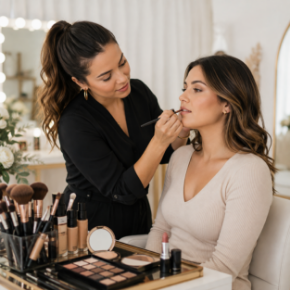


Beauty professionals already do more than provide a service. They listen, evaluate individual needs, recommend solutions, and help their clients feel more confident.
If you are a hairstylist, esthetician, makeup artist, nail technician, or salon owner, your professional knowledge can also help you create an additional source of revenue through carefully selected beauty products.
The goal is not to pressure clients into buying. It is to make it easier for them to maintain their results between appointments with products that genuinely support their needs.
Here is how to introduce retail products naturally, professionally, and strategically into your beauty business.
Why Product Sales Make Sense for Beauty Professionals
Your clients already trust your expertise. They regularly ask questions such as:
- What should I use at home?
- How can I maintain this result?
- Which product is right for my hair or skin?
- How can I recreate this look?
- What should I avoid using?
When you do not have a product available, your client may purchase something elsewhere without the guidance needed to make the right choice.
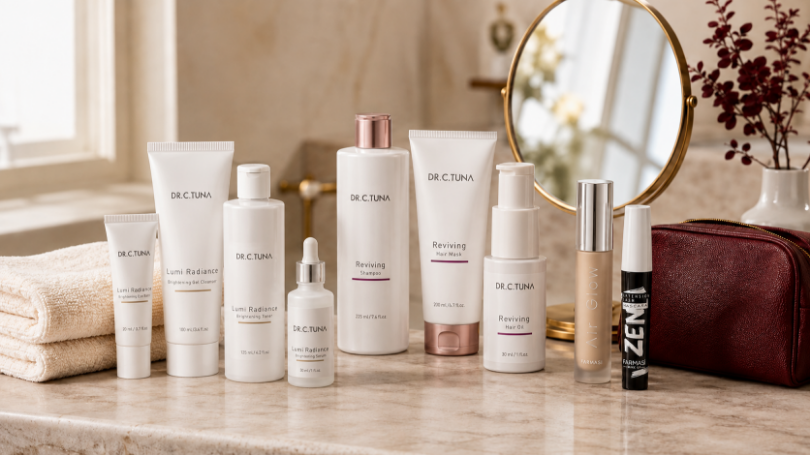
Offering a curated selection allows you to complete the client experience while creating an additional revenue stream for your business.
Product sales can also help you:
- Provide better aftercare.
- Improve the value of each appointment.
- Strengthen your professional authority.
- Encourage repeat visits.
- Stay connected with clients between services.
- Generate income without adding more appointments to your schedule.
1. Begin With Your Clients’ Real Needs
Do not start by buying a large inventory. Start by reviewing the questions and concerns you hear most often.
A hairstylist may notice that clients frequently need help with dryness, breakage, frizz, or maintaining a professional finish at home.
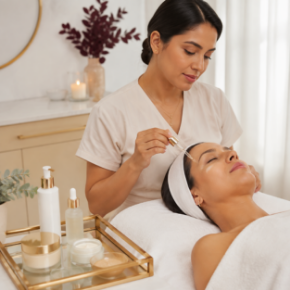
An esthetician may receive questions about cleansers, hydration, dull-looking skin, or daily sun protection.
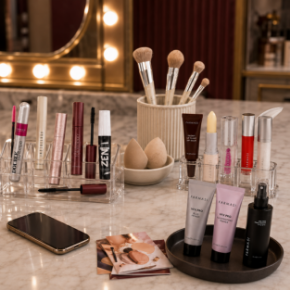
A makeup artist may be asked about foundation, mascara, lipstick, or products for creating an easy everyday look.
Write down the five most common needs your clients mention. This list will help you select products based on real demand instead of guessing what might sell.
2. Choose a Small, Curated Collection
A large display is not always more effective. Too many options can make the buying decision feel complicated.
Begin with a focused collection of products that:
- Address common client concerns.
- Complement your services.
- Are easy to explain and demonstrate.
- Fit different budgets.
- Can be used consistently at home.
- Come from a supplier you trust.
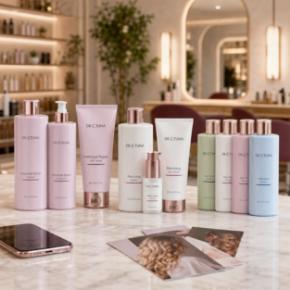
For example, a hairstylist could begin with a shampoo, hair mask, conditioner, or leave-in treatment.
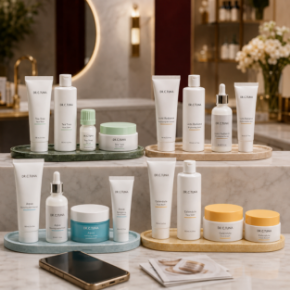
An esthetician could offer a cleanser, serum, moisturizer, and sunscreen.
A makeup professional might select a versatile foundation, mascara, neutral lipstick, and setting product.
A carefully chosen collection is easier to present, promote, and manage.
3. Recommend Products During the Service
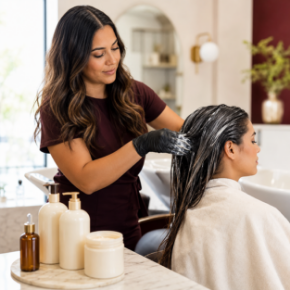
The most natural moment to talk about a product is while you are using it or discussing the client’s needs.
Instead of saying, “Would you like to buy this?” explain why you selected it.
You could say:
“I’m using this mask today because your hair needs additional moisture. If you want to maintain this softness between appointments, you can use it at home once or twice a week according to the product directions.”
This approach feels helpful because the recommendation is connected to an observation and a desired result.
Use a simple three-part conversation:
- Identify the client’s need.
- Explain what type of product may help.
- Show the client how to use it correctly.
Let the client decide without pressure. Trust is more valuable than a single sale.
4. Allow Clients to Experience the Product
People feel more confident purchasing a beauty product when they understand its texture, application, and purpose.
When appropriate, use the products during your service. Let clients see how much you apply and explain where each step belongs in their routine.
You can also provide:
- A short demonstration.
- A printed aftercare card.
- A simple routine with numbered steps.
- A QR code that leads to the product page.
- A follow-up message with usage instructions.
The easier it is for the client to understand the product, the more likely they are to use it consistently.
Always follow the manufacturer’s directions and avoid making medical or guaranteed-result claims.
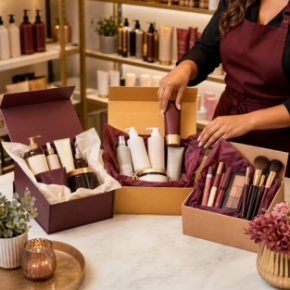
5. Create Simple Product Bundles
Bundles help clients understand which products work together and make the buying decision easier.
Instead of displaying unrelated items, organize them around a specific goal.
Examples include:
Hair Maintenance Set
A shampoo, hair mask, and leave-in product for clients who want to maintain their haircare routine between salon visits.
Simple Skincare Set
A cleanser, targeted serum, and moisturizer for clients who want an easy routine.
Everyday Makeup Set
A lightweight foundation, mascara, and neutral lip product for a quick daily look.
Give each bundle a clear name and explain who it is for. You can offer the products together while still allowing clients to purchase them individually.
6. Understand Your Real Profit
Before setting a price, calculate the complete cost of offering each product.
Include:
- Product cost.
- Shipping.
- Taxes.
- Packaging.
- Payment-processing fees.
- Promotional materials.
- Any applicable business expenses.
A simple calculation is:
Selling price − total product cost = gross profit
Gross profit is not necessarily the final amount you keep, because your business may have additional operating expenses.
Track every cost so you can determine whether the product is financially worthwhile. Avoid choosing products based only on the highest potential margin; quality, demand, and client satisfaction matter too.
Always follow your supplier’s pricing policies and any local requirements that apply to retail sales.
7. Make Your Display Easy to Shop
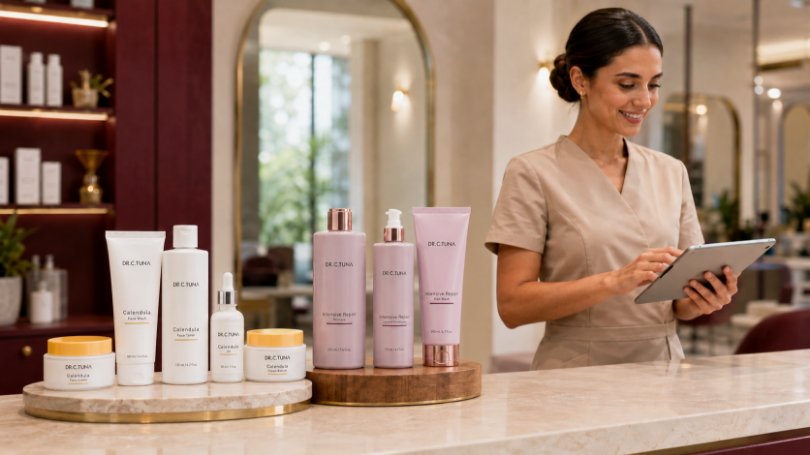
Your retail area does not need to be large. A clean shelf, countertop, or small display can be enough.
Organize products by concern or routine instead of placing everything together.
For example:
- Hydration and repair.
- Scalp and hair care.
- Simple skincare.
- Everyday makeup.
- Professional favorites.
Add clear prices and brief descriptions. Keep the display clean, well-lit, and easy to reach.
Avoid overcrowding the space. A small number of well-presented products often feels more professional than a large, disorganized inventory.
8. Promote Products Beyond the Salon
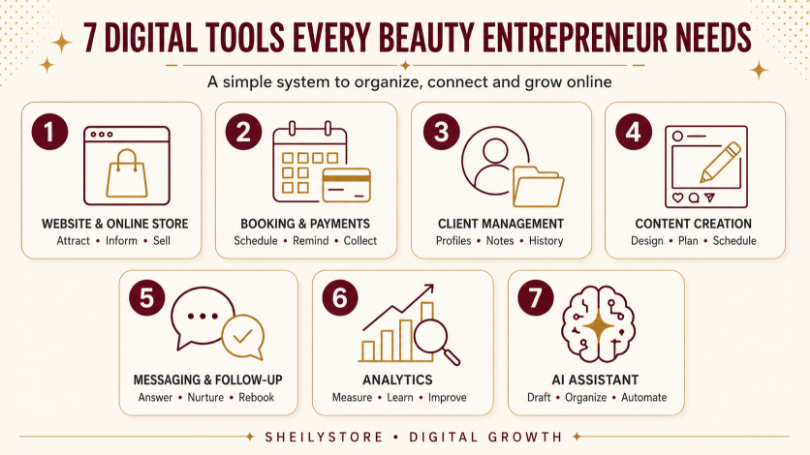
Your product collection should also be visible online.
Create educational content that answers the same questions clients ask during appointments.
You can share:
- Short product demonstrations.
- At-home routine tutorials.
- Frequently asked questions.
- How-to-use videos.
- Product comparisons.
- Before-and-after care recommendations.
- Restock announcements.
- Client testimonials shared with permission.
Focus on education and realistic expectations. Show clients how the product fits into their lives instead of posting only a picture and a price.
Include a direct link to the product or a simple call to action such as:
“Message me if you need help choosing the right routine.”
9. Follow Up After the Purchase
A thoughtful follow-up can turn one sale into a long-term client relationship.
After a few days, ask:
- Were you able to start using the product?
- Do you have questions about the application?
- How is the product fitting into your routine?
- Would you like me to remind you when it may be time to reorder?
This demonstrates that your recommendation was based on helping the client—not simply completing a sale.
Keep notes about the products each client purchases so you can provide more personalized support during future appointments.
10. Track What Actually Sells
Review your product sales regularly.
Track:
- Best-selling products.
- Items that clients request most often.
- Products that need frequent explanation.
- Average time between purchase and reorder.
- Inventory that is moving slowly.
- Profit generated by each item or bundle.
Use this information to adjust your collection. Reorder products with consistent demand and avoid investing heavily in products that remain unsold.
Starting small allows you to learn what your clients genuinely want while reducing unnecessary inventory risk.
Turn Your Expertise Into a More Complete Client Experience
Selling beauty products is not about turning every appointment into a sales presentation.
It is about using your professional knowledge to help clients protect their investment, maintain their results, and make more confident purchasing decisions.
Start with a few carefully selected products, connect every recommendation to a real need, and create a buying experience that feels educational and personal.
At SheilyStore, beauty professionals can discover products, business-ready options, and practical resources designed to help them serve their clients and strengthen their businesses.
Ready to add product sales to your beauty business? Explore For Your Business at SheilyStore.